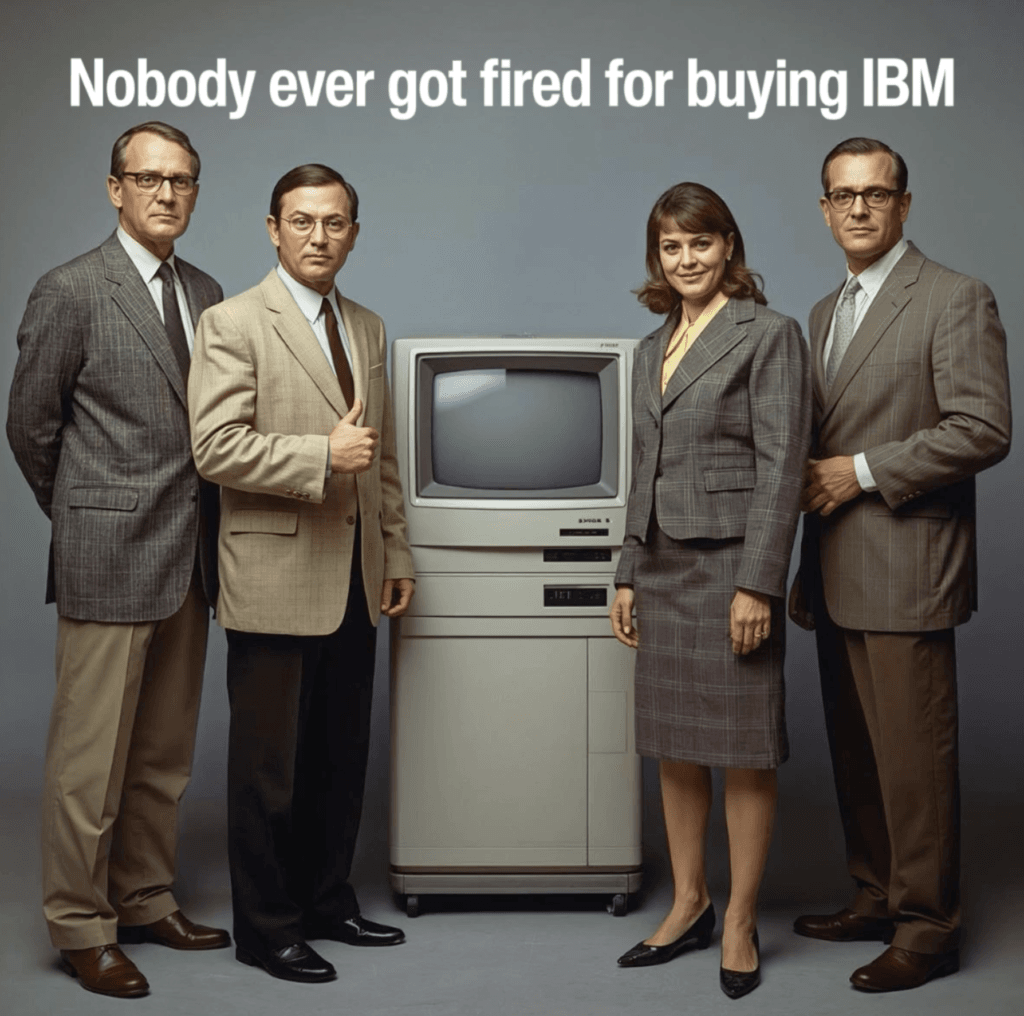
Why?
Because the customer is not just buying a solution. The customer is buying something that has to work with everything else.
Britain, the 1840s.
Brunel’s Great Western Railway built its track wider than most other lines in the country.
Broad gauge was faster. But where the gauges met, passengers changed trains and freight was unloaded and reloaded.
A Royal Commission acknowledged the technical merits of broad gauge, yet recommended the narrower one.
In 1846 it became law. Broad gauge was finished.
Not because it was worse, but because it did not fit with everything else.
The same thing decides many B2B deals.
The real competitor is often not another supplier. It is compatibility with yesterday.
Your solution can win every technical comparison and still lose.
The customer is not only counting your price, but the cost of changing everything around it. That cost rarely appears in the RFP.
Whoever has understood it before the requirements are written can do something about it. Whoever discovers it at the proposal stage can only explain it away.
That is why an Upstream Sprint starts in the customer’s picture of the problem, not in your solution.
We look for what the customer is counting but not writing down.
In your last lost deal, how much was about the product, and how much about everything around it?